

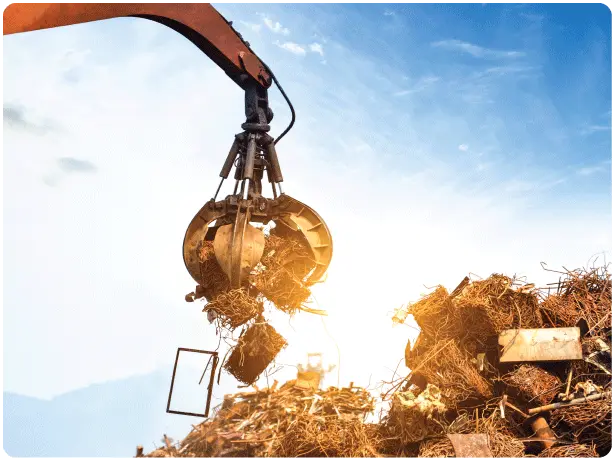
Scrap metal originates in both business and residential environments. Typically, a “scrapper” will advertise their services to conveniently remove scrap metal for people who don’t need it.
Scrap is often taken to a wrecking yard (also known as a scrapyard, junkyard, or breaker’s yard), where it is processed for later melting into new products. A wrecking yard, depending on its location, may allow customers to browse their lot and purchase items before they are sent to the smelters, although many scrap yards that deal in large quantities of scrap usually do not, often selling entire units such as engines or machinery by weight with no regard to their functional status. Customers are typically required to supply all of their own tools and labor to extract parts, and some scrapyards may first require waiving liability for personal injury before entering. Many scrapyards also sell bulk metals (stainless steel, etc.) by weight, often at prices substantially below the retail purchasing costs of similar pieces.
A scrap metal shredder is often used to recycle items containing a variety of other materials in combination with steel. Examples are automobiles and white goods such as refrigerators, stoves, clothes washers, etc. These items are labor-intensive to manually sort things like plastic, copper, aluminum, and brass. By shredding into relatively small pieces, the steel can easily be separated out magnetically.
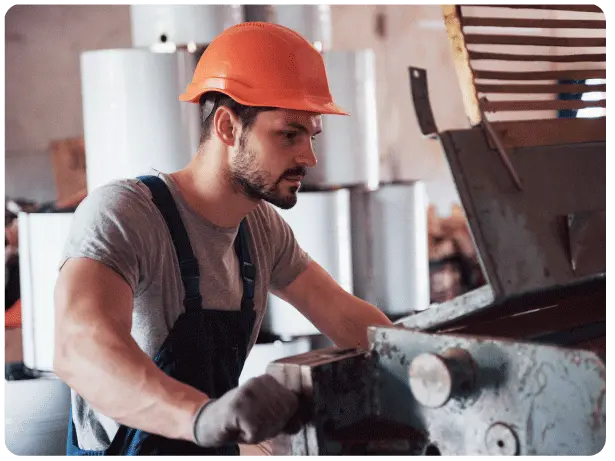
The non-ferrous waste stream requires other techniques to sort.
In contrast to wrecking yards, scrapyards typically sell everything by weight, instead of by item. To the scrapyard, the primary value of the scrap is what the smelter will give them for it, rather than the value of whatever shape the metal may be in. An auto wrecker, on the other hand, would price exactly the same scrap based on what the item does, regardless of what it weighs. Typically, if a wrecker cannot sell something above the value of the metal in it, they would then take it to the scrapyard and sell it by weight. Equipment containing parts of various metals can often be purchased at a price below that of either of the metals, due to saving the scrapyard the labor of separating the metals before shipping them to be recycled.
RESOURCES
Scrap prices may vary markedly over time and in different locations. Prices are often negotiated among buyers and sellers directly or indirectly over the Internet. Prices displayed as the market prices are not the prices that recyclers will see at the scrap yards. Other prices are ranges or older and not updated frequently. Some scrap yards’ websites have updated scrap prices.
In the US, scrap prices are reported in a handful of publications, including American Metal Market, based on confirmed sales as well as reference sites such as Scrap Metal Prices and Auctions. Non-US domiciled publications, such as The Steel Index, also report on the US scrap price, which has become increasingly important to global export markets. Scrap yards directories are also used by recyclers to find facilities in the US and Canada, allowing users to get in contact with yards.
Benefits of recycling
According to research conducted by the US Environmental Protection Agency, recycling scrap metals can be quite beneficial to the environment. Using recycled scrap metal in place of virgin iron ore can yield:
- 75% savings in energy
- 90% savings in raw materials used
- 86% reduction in air pollution
- 40% reduction in water use
- 76% reduction in water pollution
- 97% reduction in mining wastes
Every ton of new steel made from scrap steel saves:
- 1,115 kg of iron ore
- 625 kg of coal
- 53 kg of limestone
Energy savings from other metals include:
- Aluminium savings of 95% energy
- Copper savings of 85% energy
- Lead savings of 65% energy
- Zinc savings of 60% energy